Double G Stable & Farms
From AlexBrownRacing
Contents |
Where we are
Located in Central NC.
1995 Old County Farm Rd
Sophia, NC 27350
Email us at Doublegstable1@embarqmail.com
WebSite Double G Stable & Farms
Important Happenings
Update!
The FOB's helped us save a great gelding named Dandy.
He is a 12 year old AQHA registered gelding. He was a western pleasure show horse that found himself broke down and in a bad place. His owners were not doing right by him. No hoof care, no water, and very little feed. By their own admition he was loosing weight due to lack of feed.
Dandy is doing GREAT. He has gone from near crippled to running around the farm. The vet feels as long as he stays sound he can be ridden. We did put Dandy through a short round of test rides and he is a GREAT ride.
We are in the news!!!
Check our website or check here...http://www.digtriad.com/news/local/article.aspx?storyid=108440&catid=57
More media coverage!!! Here is the link! http://texashorsetalk.com/breakingnews.htm
Description of Rescue
We specialize in Blind and Partly blind horses. I have seen WAY too many at auctions and sales just being sold for meat. We know from experience that no blind horse is useless! They simply need a chance to shine! You would be amazed at what they can do with their eyes closed!
We here at Double G Stable & Farms are dedicated to helping both horses and riders heal their wounds. We specialize in training and re-training blind horses. We firmly believe every able-bodied horse is happier with a job. Being blind does not make them unable!
In a perfect world there would be not unwanted horses. Sadly, that world does not exist. So we do what we can to help those who need us. Our rescue not only takes in blind horses, but the neglected and unwanted.
Since we are a small farm, we only take in a limited number of horses for rescue. It never fails, just as soon as we have a spot open, a horse in need shows up. Oh how I wish it wasn't true, but sadly it is.
Our main focus is returning these horses to a productive life. Everyone knows a horse that can be used has a better chance at a home than a pasture ornament.
Hannah
On Monday afternoon (11-2-09) Our beloved jumping lesson horse Hannah started to colic. She is a horse that someone else had rescued before us, but she was becoming too high maintainance for them so we took her.
Our vet was called immediately and Hannah was diagnosed with impaction colic. For anyone who doesn't know what this means basically she had a large mass of fecal matter lodged between her small and large intestine that would not pass.
Hannah was given meds and filled by a tube passed through her nose to her stomach with water and a gallon of mineral oil to help soften the impaction and help it to move on. When caught early and depending on the severity they and most times pass these with in 24 hours.That evening I watched Hannah for any signs of poop or increased pain. She passed 2 small piles and at 2 am I felt she was feeling well enough for me to head to bed for a while.
When I checked on Hannah the next morning, she had not continue to progress and was in distress again. I called our vet and told her Hannah was an emergency again. This time the prognosis was not as good. She still had the impaction and it was larger and harder despite treatment.Hannah was hooked up to an IV to help keep her hydrated and was put on more medicine to be given every 12 hours as well as pain medicine to be given every hour if needed. She got more water passed into her belly by tube as well. We used ultrasound on her belly to see if we could find anything like tumors that would be causing this. Ultrasound is only so effecting in looking at an adult horses belly. We did see some of the blockage. Her spleen looked good, but her liver was "abnormal" Which we knew but we needed to look for tumors. So all I could do at this point was wait and help keep her comfortable.
On Wednesday Hannah was still getting pain meds every hour by IV. We took her for a short walk to let her eat just a little grass to hopefully start things moving. But she was just not as interested in the grass. Which really began to worry me since she had been looking forward to getting a little grass.
At 3 pm things started taking a dramatic turn for the worse. Her pain levels were rising pretty fast. By 6 pm the color of her gums had changed to a dark pink which is a sign of toxins in the blood. I called the vet to come evaluate her one last time, knowing full well there was a 99% chance we would have to let her go.After another rectal exam and evaluation we decided that yes it was time.
Since Hannah has maintained some appetite we decided to give her one last meal. She stuck her head in that bucket and all but inhaled the food.Almost immediately after finishing her food she had a small, unexpected, and very wet BM. So we waited a few minutes, and unhooked her IV. We let her walk around her stall for a few minutes to see how she would react. She was basically circling like a shark looking for food.
So we took her outside for a short walk to see how she felt about that...she nearly pulled my arm off trying to eat anything she could see. Took her and let her eat a little grass and now she is standing there eating like nothing ever happened.We put her back in her stall where she continued to have small wet BM's Her heart rate improved and she was as perky as could be. Definitely NOT acting like a horse that has been impacted for 2 days and is showing signs of toxicity.
There were only 2 possible things that could have been going on.
1. She had ruptured. The pressure and pain stopped because the intestines were now leaking in to the body cavity. In which case she would soon show signs of going into shock and further toxicity. At which point the vet would back and help her pass.
OR
2. After 2 full days of colic she is FINALLY starting to move her impaction, and it was her "last supper" that got it moving. Which at this point would have been nothing short of a miracle.
While the new signs were encouraging I knew we were nowhere near being out of the woods yet. I stayed up all night with her again watching for signs of pain to return or impending shock.
When Thursday morning arrived and Hannah was still with us I started to think maybe we did have a Miracle on our hands. For her to pass the impaction after 2 days and after eating a huge meal flies in the face of ALL veterinary medicine.
Hannah has continued to progress and is now being slowly returned to her normal feed schedule.
At this point we feel we have been blessed with a Miracle. We had also been blessed with a HUGE vet bill close to $1000. If anyone is willing to help pay for this Miracle please visit our website at www.freewebs.com/doublegstable There are links to send funds. Or simply go to Pay Pal at www.paypal.com send your help to us at doublegstable1@embarqmail.com
HRH Makeda
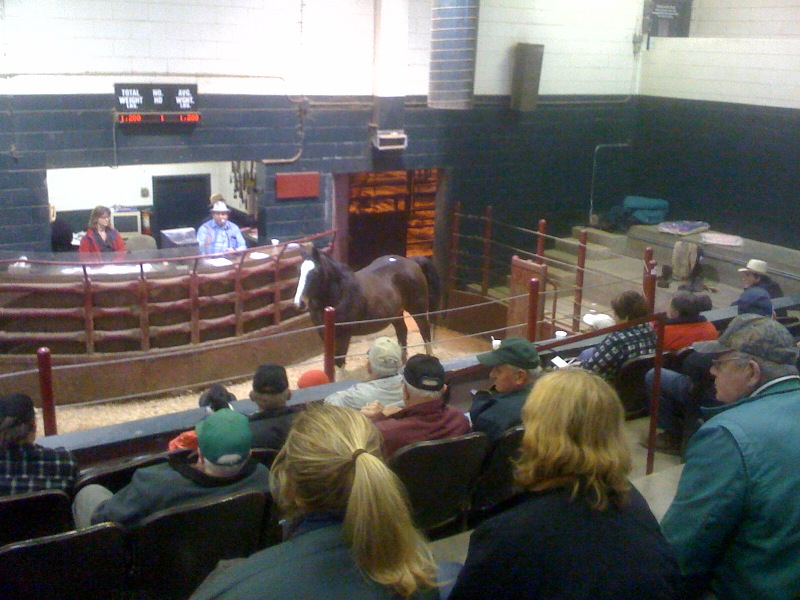
Makeda was bought at a local auction for a whole $25. She was in terrible shape. She is a 25 year old Standardbreed. She had been through 3 auctions in 32 day starting at New Holland in PA.
She has only 5 molars making eating harder for her. She is a bright and funny character who just does not know she is 25. Most days she acts as if she is 2!
As you can see she has a very large old halter scar. I bet this girl has some stories to tell.
Sweet Cherry Pie
Sadly we lost Cherry to EPM earlier this year.
Marigold
Marigold is just one happy old girl. She still just loves to be groomed! You can tell she was doted over at one point in her life! She is under saddle on a limited basis. We were finally able to read enough of her tatoo to find out who she is. Marigold's name is Cash Criterion. She is a FULL 32 years old and still going strong!
Keep up with Marigold here.
Ophelya (Margaret)
See Miss "O"'s story here Ophelya's Story
Careless Smoker AKA Derby AKA Derby the love bug
Derby was adopted! See his Story here Derby's Story
Hope
Hope has come back to us and is in need of a new home! See her story here Hope's Story
Jackjack
We found Jackjack at a local auction. He was just so sad and pitiful! He came with lice and was very afraid of people. He has since been gelded! (Thanks FOB's) He is now the guardian of our blind herd. He keeps Miss "O" and Marigold and Silver company in the pasture. He looks out for them and even leads them to the food. He has really opened up since he got here! He now comes running to the fence just to meet a new person. This skinny little donkey has really blossomed into a great little guy! The first photo is from this winter when he 1st came.
Check out Jackjack's videos
Silver
Silver is doing well. He has the whole pasture figured out and has made friends with both Jackjack and Ophelya. He is doing much better with the cribbing. That Miracle Collar really works. He kept trying for a few days after we put it on, but now seems to have accepted that he can't crib with it on. For the first few days he was actually a bit crabby! I guess he didn't like me taking away his fun.
Questions from FOBs
1. As the person completing this questionnaire, what is your position with regard to the rescue? I am the owner, operator, trainer, caregiver, and Head Poop Picker
2. Is the rescue incorporated? NO
3. If so, do you have the legal authority to speak for the Board of Directors? N/A
4. Who are the members of the Board of Directors (please provide an email or other contact information; if your website provides this information, please identify your website URL in this answer) (Note: The names of the Board of Directors for incorporated businesses may be validated by calling the office of the Secretary of State.)? N/A
5. Is the rescue a 501 c 3 IRS rescue? No
6. When was this exemption granted? N/A
7. If the exemption has not been granted, when did the rescue commence the application process? N/A
8. What is the physical address of the rescue (Note: Satellite views of most, but not all, locations are available at www.googleearth.com)? 1995 Old County Farm Rd Sophia, NC 27350
9. What is the legal nature of the property upon which the rescue animals reside (personal property, property of the corporation, rented property, other as described.)? Personal property that the bank owns most of.
10. How many foster facilities are associated with the rescue? 2
11. Is the facility a rescue, sanctuary, or both? Both, if necessary.
12. At the time of this questionnaire, how many equines reside at the rescue and any foster facilities associated with the rescue? 8 rescued, 3 lesson, 2 boarded
13. What is the date on which the rescue or sanctuary took in the first animal and since that date? 2000 Until 2004 we only took 1 to 2 horses a year. In total 50 have passed through our doors ( or is the gates)
14. How many have been adopted out or officially transferred to another rescue? 37 have moved on.
15. What is the primary source of financial resources which pay for the maintenance and emergency needs of the rescue’s equine residents? My jobs, training outside horses, boarding outside horses, lesson program.
16. What is the source of any supplemental funding (please separate local fundraising, ABR fundraising and any other internet fundraising such as Facebook)? Approximately what percentage does each source make up for the total funding of the rescue? Local fundraising, 20% Extra work/sales (jewelry, recycling, hauling, and anything else I can do to make $) 50% Internet 30%
17. What percentage of your budget do you spend on each of the following: bail/1%, feed/hay/supplements=29 %veterinarian=10 % farrier= 5 % land (purchased or rented)=50 % maintenance of facility (equipment and structures.) = 5% Most is new or close to it. These are estimates.
18. Who physically provides for the care of the rescue’s equines? ME
19. Is there an attendant at the rescue 24/7? Approximately 20/7 on average.
20. During an emergency affecting the primary caretaker(s) , who would provide care for the animals. Horse friends of the rescue that are between 5 and 30 mins away. All with varying knowledge of horses.
21. What information is discussed with the Board of Directors and at what intervals do you have meetings. N/A
22. How many volunteers do you have and what is the nature of duties they perform? Currently we have 7. And they do everything from stall cleaning to some riding to grooming to helping with any medical treatments. It all depends in the volunteers experience and comfort level.
23. How often are you assisted by volunteers? Average of 1 per week.
24. Who is your primary veterinarian? Vets at Scarlett Mobile Large Animal
25. Is he/she available as a reference? Yes just ask and I will gladly forward their info.
26. Who is your farrier? Jerry Linker
27. Is he/she available as a reference? Yes, again just ask and will gladly give info.
28. Where do you shop for grain? Tractor supply or Southern States
29. Who is the manager? I am terrible with names, and usually remember the girls to the register better.
30. Is he/she available as a reference? Not sure how helpful they would be I am far from their biggest customer.
31. What is your primary source of hay? John Hohn has been for the last 5 years.
32. Describe what the status of the animals would be if the primary caretaker(s) became suddenly unable to provide care for both the short-term and long-term? At this point in an emergency that required all the horses on our farm to leave ALL have a place with their owners or associates.
33. What is your procedure for adopting animals (please discuss your pre-adoption and post-adoption processes.)? Pre- adoption requires visits to our farm to visit and “get to know” horse. Also vet references and farrier references. Site checks. Sit down reading and signing of contract. Post adoption is announced and unannounced site checks, plus follow up with references if necessary.
34. Once an equine is at the new home, how do you approach follow-up of the animal? Announced and unannounced visits are both included in our contract. These are not done on a specific schedule but are in regular intervals and more often if necessary.
35. Do you have an adoption contract? YES a long one
36. If so, how is the subject of breeding handled? NOT ALLOWED
37. Once an animal is taken into the rescue, how is its level of training evaluated? On a few levels. What are they physically capable of doing? What do they know how to do? What do they LIKE to do?
38. What is the rescue’s program for basic ground training of equines that have that initial level of need? We are slow and steady taking into account their physical and emotional status. We have lots of trails that are great for long walks and “talks” Yes, from the ground. I think they should be acquainted with as much as possible BEFORE I sit on their back, and a round pen doesn’t always give that. Lots of hands on the horse. I work and treat every horse as an individual. So yes there are some variables.
39. What is the rescue’s program for starting horses that have that level of need (please include at what age you would start an individual horse.)? No horse, even by our contract, can be started under saddle before age 3. Then it is again slow and steady. I don’t move on until they have nearly mastered the first task. For example no one sits in the saddle until they don’t have bucking fits. No trotting before walk, turn, stop. No cantering until they trot, walk, turn, stop and back. Again, I work and treat every horse as an individual. So yes there are some variables.
40. What is the rescue’s program for the retraining of horses to make them more adoptable because their present training level is not conducive to adoption (e.g., the OTTB who needs to be training for another activity?)? I weigh what they know against what they LIKE to do. We have all seen ring sour horses, the OTTB who can’t jump, the hunter that moves like he has lead weights in his feet. Just because they have the movement and conformation to show does not be they will be happy with a show career. I expose them to a variety of activities and train accordingly.
41. What is your experience with regard to initial training and retraining of horses and other equines that serves to support that you possess the ability to be successful with such activities? EVERY horse I have owned/rescued has needed training. I started training School horses at the barn where I initially took lessons and worked. If it acted up that week, or needed more work, I got to ride it. I also picked up quite a few rides there as it was also a boarding barn. With 62 horses in a barn you get A LOT of experience. I showed on the ApHC circuits for a few years before I gave that up. I trained all of our rescue horses. Some of which are showing up and down the east coast and winning. To date I have never had a complaint about a horse I trained. I even have on being fox hunted by a 1 legged man.
42. What is the rescue’s program for the retraining of horses that exhibit traits likely brought on by improper training? This depends on the problem. Sometimes a career change is all that is needed. I don’t believe in making a big deal about a problem unless it is dangerous(kicking) I had one that LOVED to run backwards if you pushed him to forward (was trained with some SERIOUS bits) I simply would turn him and ask him to move off. If this meant we did 10 circles before we went then so be it. He eventually figured out I wasn’t giving up or ripping his face off. Eventually, the second he thought about backing up without a cue, I only ever had to open a hand and he would quit. Lots and lots of persistence and patience.
43. How does the leadership of the rescue approach end-of-life decision for the equine residents (please discuss the circumstances for which such decisions would be necessary and what life-ending procedure(s) would be utilized?)? I am the sole decision maker. I will consult with the vets, but in the end it is up to me. To date we have only ever used chemical euthanasia administered by a veterinarian. I consider the reason we are thinking about euthanasia (i.e. injury, illness, age, disease) I consider the prognosis. I consider quality of life. And I consider the cost. Yes that is terrible, but not all costs can be justified. As for using a gun to end a horses life to me this is only viable if there are EXTREAM circumstances AND there is no vet that can arrive in time.
44. Would the rescue’s leadership and/or caretaker(s) consider shipping to slaughter as a possible life-ending method? NEVER
45. Are you open to a request from donors for pictures and/or other information about a rescue animal that has received funding via ABR? ABSOLUTLY, I love sharing pictures of our horses.
46. What ABR members have you personally requested to assist with fundraising posting (please name them by ABR call name.)? I have only ever asked 1 person that I can remember and she does not post here often and it was 1 time in an emergency. Mostly a lurker, and not often at that. Most folks that “bump” for us do so of their own choosing. ( Thanks ladies!!)
47. Do these ABR volunteers have their own WIKIs (if not, please ensure that they secure them.)? I doubt she does, but that was 1 time and I am not sure she has posted since.
48. This questionnaire is entirely voluntary but could have bearing on decisions made by donors to provide the rescue with financial support or not. Given this reality, is there any additional information you would like to provide to heighten a positive perception of your facility. I am always open to questions about anything. I only ask they be respectful. I have a reason for everything I do. You don’t have to agree with me, but please respect my decisions and realize there is more than one answer to most questions regarding horses. Again, Just ask! I will be HAPPY to answer!